Electrical Safety Standards: A Landlord EICR Guide
James Wilson
March 15, 2024
The electrical safety standards for rented homes in England are among the most actively enforced parts of landlord compliance, and among the most misunderstood. They are set out in the Electrical Safety Standards in the Private Rented Sector (England) Regulations 2020, which require the fixed electrical installation to be inspected and tested at least every five years, the report to be given to tenants, and anything dangerous to be put right. This guide explains what the electrical safety standards demand, how the five-year cycle works, what the C1, C2, C3 and FI codes mean, and where PAT testing and consumer unit upgrades fit.
What the Electrical Safety Standards Regulations 2020 Require
The regulations came into force for new tenancies from 1 July 2020 and applied to all existing tenancies from 1 April 2021, so no transitional period remains to shelter behind. Stripped back to essentials, the electrical safety standards require a landlord to:
- Ensure the national standard for electrical safety — the IET Wiring Regulations, BS 7671 — is met throughout the tenancy.
- Arrange an inspection and test of the fixed installation: the wiring, sockets, switches, light fittings and consumer unit, at intervals of no more than five years.
- Obtain a written Electrical Installation Condition Report (EICR) from a qualified and competent person.
- Supply that report to tenants, and to the local housing authority on request.
- Carry out any remedial or further investigative work identified, and evidence that it was done.
The full text sits on legislation.gov.uk, and the accompanying government guidance for landlords, tenants and local authorities is worth reading once in full. Between them they are the authoritative source if anyone disputes what the electrical safety standards require of you.
Who must comply with the electrical safety standards
The rules cover most private tenancies where the property is the tenant's only or main residence, including assured shorthold tenancies, licences to occupy and houses in multiple occupation. A narrow set of arrangements sits outside them: lodgers sharing with the landlord's family, long leases of seven years or more, registered social housing, student halls, hostels, care homes and hospital accommodation.
Commercial premises are not covered, but business landlords and occupiers still carry duties under the Electricity at Work Regulations 1989 and general health and safety law. A commercial EICR remains the accepted way to show a shop, office or industrial unit has a safe installation.
The Five-Year EICR Cycle in Practice
The electrical safety standards set five years as a maximum interval, not a target. Where the inspecting electrician specifies a shorter re-test date — common in older stock, heavily extended wiring and licensed HMOs — that date binds you, and it is the one a council will check.
Two events reset the clock. Significant electrical work — a rewire, a new circuit, a consumer unit replacement — should be certified in its own right, as should a change of use such as converting a family home into an HMO, where a fresh assessment is sensible even if the report has time left.
What the inspection actually covers
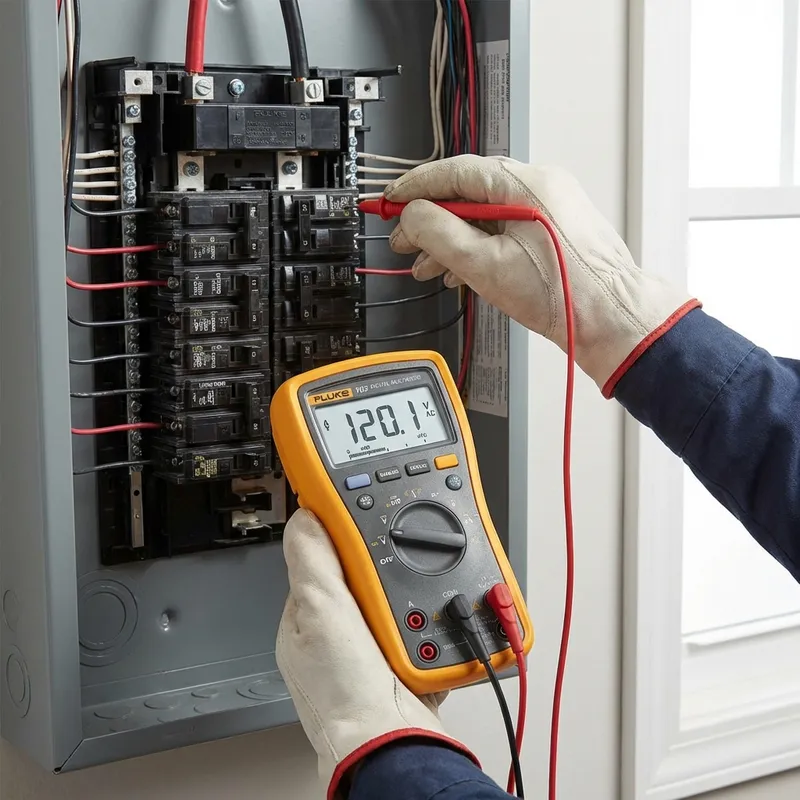
An EICR is a structured inspection and test of the fixed wiring, not a visual once-over. A competent inspector verifies earthing and main protective bonding, confirms protective devices are correctly rated, measures insulation resistance and earth fault loop impedance, tests residual current device operation, and inspects accessories for damage, overheating or unsafe alterations. Each departure from BS 7671, the technical backbone of the electrical safety standards, is written up as a coded observation.
Testing is intrusive, so expect the power to be off for parts of the visit and the inspector to need access to the consumer unit, the meter and a sample of accessories. Warning tenants avoids a wasted appointment.
What the report does not cover
Portable appliances plugged into a socket are not part of the fixed installation, so the electrical safety standards in these regulations do not reach them. Nor do they cover gas appliances, alarms or emergency lighting, which run on separate cycles. In a block or converted house with shared circulation space, emergency lighting testing is a distinct exercise.
C1, C2, C3 and FI Codes: What Makes a Report Unsatisfactory
Every observation carries a classification code, and those codes decide whether the installation meets the electrical safety standards. The verdict appears on the front page.
| Code | Meaning | Report outcome | What it means for you |
|---|---|---|---|
| C1 | Danger present, risk of injury | Unsatisfactory | Made safe on the day, then repaired |
| C2 | Potentially dangerous | Unsatisfactory | Remedial work within the 28-day window |
| FI | Further investigation required | Unsatisfactory | Investigate, then act on what is found |
| C3 | Improvement recommended | Satisfactory | Advisory only, plan at your convenience |
The last row catches landlords out most often. A report can list a long series of C3 observations and still be signed off as satisfactory, because a C3 records a difference from today's BS 7671 rather than a danger. If you are told every C3 must be cleared first, ask for the reasoning in writing: that is not what the electrical safety standards demand. Our guide to the unsatisfactory EICR covers each code in depth.
The 28-Day Remedial Window and Written Confirmation
This is the part of the electrical safety standards carrying the tightest deadline. Where a report records a C1, C2 or FI, remedial or further investigative work must be carried out by a qualified person within 28 days of the inspection, or any shorter period the report specifies. Three details catch landlords out.
- The clock runs from the inspection, not from the day the report arrives. If the paperwork takes a week to reach you, a quarter of the window has gone.
- Written confirmation is part of the duty. You need confirmation from the electrician that the work is complete and the installation now meets the required standard.
- That confirmation must be distributed. A copy goes to each tenant and to the local housing authority within 28 days of completion, with a copy of the report that prompted it.
An FI is cleared by investigating rather than guessing. An electrical diagnostic visit traces the circuit and either resolves the concern or reclassifies it as a C1, C2 or C3, so you know what it will cost.
Who Gets the EICR, and by When
Handing the report over is a duty in its own right, and the one most often overlooked because the inspection feels like the job done. The deadlines set by the electrical safety standards are:
- Existing tenants — within 28 days of the inspection.
- New tenants — before they take up occupation.
- Prospective tenants — within 28 days of a written request.
- The local housing authority — within 7 days of a written request.
- The next inspector — the previous report should be available at the following inspection.
Keep the dated emails or delivery records. Where compliance is challenged, the paper trail showing the report was issued, the work instructed and the confirmation sent is what protects you. The same applies elsewhere: the annual gas safety record, the EPC, the How to Rent guide and the deposit prescribed information each have their own service rules, and our guide to Section 21 and safety certificates explains why serving them late matters.
How Councils Enforce the Electrical Safety Standards
Enforcement sits with local housing authority private sector housing teams. Where a council has reasonable grounds to believe a landlord is in breach of the electrical safety standards, it can serve a remedial notice requiring the work within 28 days. If that notice is ignored, the authority can arrange the work itself, with the occupier's consent, and recover its costs. It may also impose a financial penalty of up to £30,000 for a breach.
Licensing is the other pressure point. Councils routinely ask for a current EICR when processing HMO and selective licence applications, so a missing or expired report can hold up a licence as well as trigger enforcement. Schemes are designated locally, and the areas covered, the fees and the conditions differ from one council to the next, so check your own local authority rather than assuming a neighbouring borough's rules apply. Our HMO licence guide covers the application process, and the landlord safety certificate checklist lists the documents a council will want. Fire safety in communal areas sits under the Regulatory Reform (Fire Safety) Order 2005 and is also applied locally, which is why a fire risk assessment is often requested alongside the electrical paperwork.
Wider reform of the private rented sector — possession procedures, new or expanded licensing schemes, a higher minimum EPC band — has been proposed, consulted on and revised more than once. None of it alters the electrical safety standards described here, but check GOV.UK for the current position before acting on anything you read about future requirements. Today the Minimum Energy Efficiency Standard still requires most lettings to reach EPC band E.
Where PAT Testing and Fuse Box Upgrades Fit In
Two related jobs are regularly confused with the five-yearly inspection, and the distinction saves money and argument.
PAT testing supplied appliances
Portable appliance testing is not a separate statutory certificate, and it is not required by the 2020 regulations, whose electrical safety standards deal only with the fixed installation. Landlords do carry a general duty to ensure electrical appliances they supply are safe. PAT testing is the recognised way of evidencing that duty for kettles, fridges, washing machines and the rest of a furnished let, and licensing authorities frequently expect it in HMOs. The HSE explains in its guidance on portable appliance testing that there is no blanket legal requirement to test every appliance every year, and that frequency should follow risk. Let unfurnished and supply nothing, and there is little to test.
Consumer unit and fuse box upgrades
An obsolete consumer unit is a common reason a report comes back unsatisfactory: a rewireable fuse board, a plastic enclosure where a metal one is now specified, or no residual current device protection where it is required today. Replacing it is often the cheapest route back to a satisfactory outcome, because a modern board with correctly specified protective devices can clear several C2 observations at once. A consumer unit replacement is certified separately, and that certificate sits alongside the EICR rather than replacing it.
A new board does not by itself bring an installation up to the electrical safety standards. If the cabling behind it has degraded or the earthing is inadequate, those items still need attention, and a good contractor will say so before quoting.
Booking an EICR That Meets the Electrical Safety Standards
Meeting the electrical safety standards is straightforward once the inspection is booked. Choose a contractor who tests to BS 7671, holds the relevant inspection and testing qualifications, is registered with a competent person scheme and carries public liability insurance. Ask what the price includes and how quickly remedial quotations follow. Then diary the expiry date and rebook early rather than on the deadline.
Our registered engineers cover every London borough. Review costs on our pricing page, arrange an EICR certificate through the online booking form, or contact us to discuss a portfolio, an HMO or an existing unsatisfactory report.
Frequently Asked Questions
How often does a rented property need an EICR?
At least every five years, and sooner if the inspector specifies a shorter interval or you carry out significant electrical work. A new report is needed once the previous one expires, whether or not the tenancy has changed.
Does a C3 code mean my property has failed?
No. C3 means improvement recommended and does not make a report unsatisfactory. Only C1, C2 and FI codes produce an unsatisfactory verdict, and those are the items subject to the 28-day remedial window.
Do the electrical safety standards require PAT testing?
No. The 2020 regulations cover the fixed installation only, and there is no statutory PAT certificate. PAT testing is a practical way of evidencing that appliances you supply are safe, and many licensing schemes expect to see it.
What happens if my tenant will not allow access?
Give reasonable written notice, offer flexible appointments and record every attempt. The regulations recognise that a landlord is not in breach where they can show they took all reasonable steps to comply, so documenting your efforts is the protection.
This article is general guidance on the electrical safety standards for landlords in England and is not legal advice. Requirements differ elsewhere in the UK, and some duties — licensing and fire safety in particular — are set locally. Check GOV.UK and your own local authority for the current position before you act.
About the Author
James Wilson
Senior Compliance Officer
Specializing in UK property law and safety regulations with over 15 years of experience in the London market.