Landlord Safety Certificates: The Complete UK Checklist
James Wilson
August 4, 2026
Landlord safety certificates are the paperwork that proves a rented home is safe to live in, and getting them wrong turns a well-run tenancy into a legal problem. This guide sets out every certificate a UK landlord may need: who needs each one, how often it is renewed, what has to be handed to tenants and when, and how long to keep it. Each section links to the detail on that particular check.
Not every property needs every document here. A one-bedroom flat with electric heating and no landlord-supplied appliances needs far fewer landlord safety certificates than a licensed HMO in a converted Victorian terrace. What follows is the full picture, so you can work out which parts apply.
What Landlord Safety Certificates Actually Are
The phrase covers two different things, and it helps to separate them.
- Statutory certificates — documents the law requires you to obtain, such as the Gas Safety Record and the Electrical Installation Condition Report. Missing one is a breach in itself.
- Assessments and evidence — records such as a fire risk assessment or appliance testing, where the law sets a duty and the document proves you discharged it.
Both matter. Councils, insurers, lenders and courts all look for the same thing: a dated document, produced by a competent person, covering the right property. Landlord safety certificates are only useful if they are current and you can find them quickly.
The other point to grasp is that landlord safety certificates run on separate clocks — one year, five years, ten years — and the renewal dates rarely line up. That is why a checklist beats memory.
Gas Safety Record (CP12): The Annual Certificate
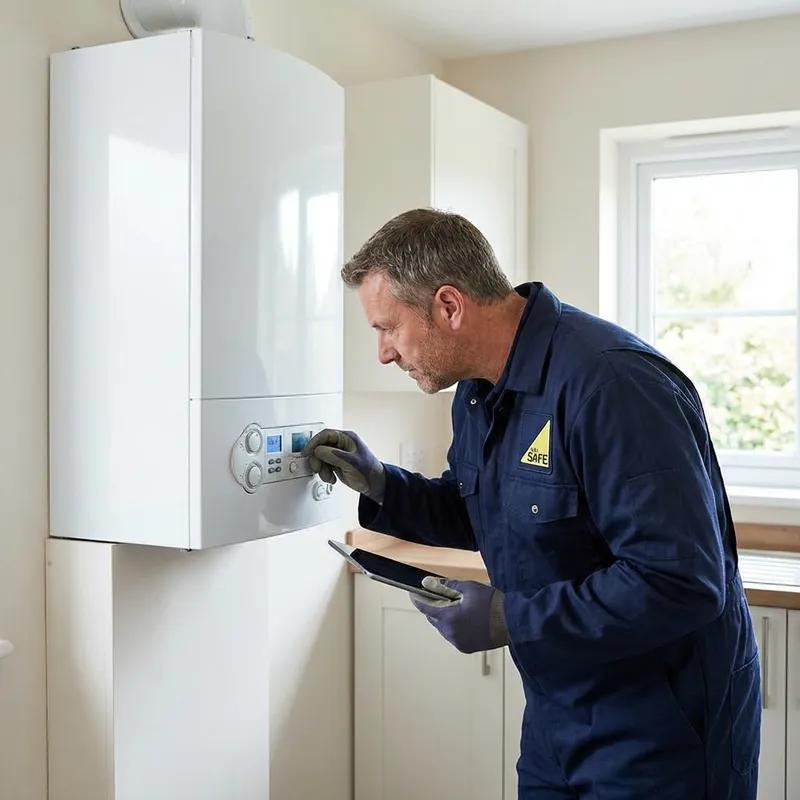
If your property has any gas appliance, pipework or flue you are responsible for, the annual gas safety check is the most time-critical of all landlord safety certificates.
Under the Gas Safety (Installation and Use) Regulations 1998, every relevant gas appliance and flue must be checked for safety at least every 12 months by an engineer on the Gas Safe Register. The engineer issues a Landlord Gas Safety Record, still universally known as a CP12.
Who needs one, and how often
- Who: any landlord of a property with gas appliances, pipework or flues — hobs, boilers, fires and water heaters.
- How often: every 12 months. The check can be done up to two months early without losing the original anniversary date.
- Who can do it: only a Gas Safe registered engineer, working within the categories on their registration card.
What tenants must be given, and when
- Existing tenants: a copy of the record within 28 days of the check being completed.
- New tenants: a copy at the start of the tenancy, before they move in.
- Record keeping: keep each record for at least two years.
Appliances the tenant owns are their responsibility, but the pipework and flue serving them usually are not. If a tenant refuses access, log every attempt in writing — that trail is what shows you took all reasonable steps. Book an annual landlord gas safety certificate for a residential let, or a commercial gas safety certificate for business premises.
EICR: The Five-Yearly Electrical Certificate
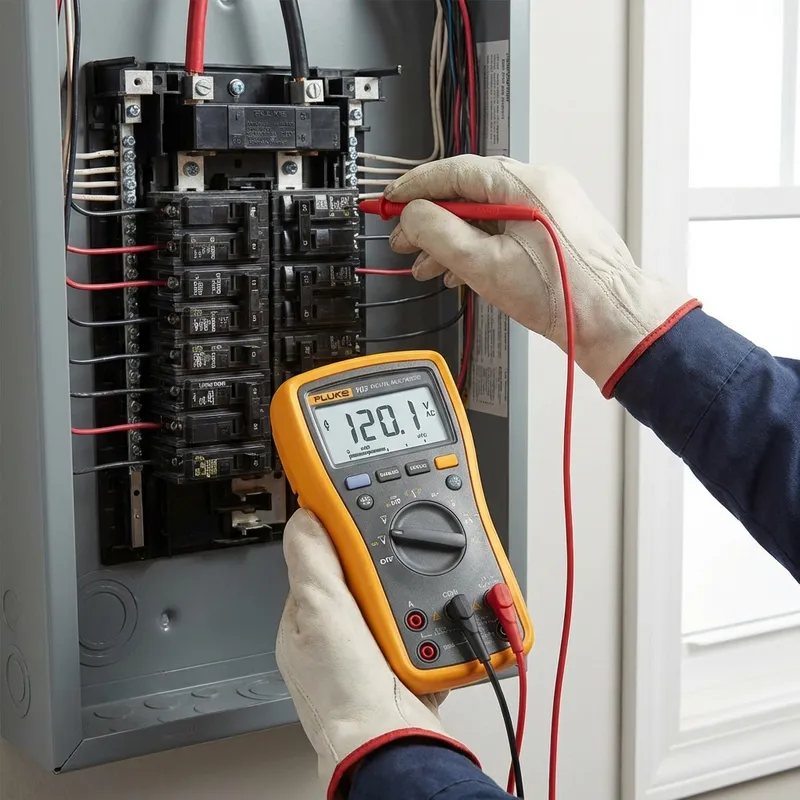
The Electrical Installation Condition Report sits alongside the CP12 as the second non-negotiable item among landlord safety certificates in England.
The Electrical Safety Standards in the Private Rented Sector (England) Regulations 2020 require the fixed installation — consumer unit, circuits, sockets, lighting points, earthing and bonding — to be inspected and tested at intervals of no more than five years. The duty has applied to all existing tenancies since 1 April 2021.
Satisfactory or unsatisfactory
The report is marked satisfactory or unsatisfactory. Any observation coded C1 (danger present), C2 (potentially dangerous) or FI (further investigation required) makes it unsatisfactory; a C3 is advisory only. Where remedial or investigative work is required, it must be completed by a qualified person within 28 days of the inspection, or sooner if the report says so, and you must obtain written confirmation that it is done. Our guide to an unsatisfactory EICR and what the codes mean covers that process in full.
What tenants and councils must be given
- Existing tenants: a copy of the report within 28 days of the inspection.
- New tenants: a copy before they occupy the property.
- Prospective tenants: a copy within 28 days of a written request.
- The local authority: a copy within 7 days of a request.
- Your next electrician: a copy of the previous report, before the new inspection.
Local authorities can impose a financial penalty of up to £30,000 per breach, making this the most expensive of the landlord safety certificates to neglect. Arrange a domestic EICR certificate or, for shops, offices and mixed-use buildings, a commercial EICR.
EPC: Required to Market, Valid for Ten Years
An Energy Performance Certificate is the odd one out, because it measures energy cost rather than physical danger. It is still one of the landlord safety certificates you cannot start a tenancy without.
- Who needs one: you must hold a valid EPC to market a property for rent, and the rating must appear in the advertisement.
- How often: an EPC is valid for ten years from issue.
- What tenants get: a free copy at the earliest opportunity — in practice at or before the start of the tenancy.
- Minimum standard: under the Minimum Energy Efficiency Standard (MEES), a property normally cannot be let with an EPC rating below band E unless a valid exemption is registered.
Proposals to raise the minimum rating for rented homes have been consulted on repeatedly and the position has shifted more than once. Treat any future target band or deadline you read about as provisional, check the current position on GOV.UK before spending on works, and take your own advice on the timing of a retrofit. What is settled is the band E floor and the ten-year validity. Book an EPC certificate if yours is close to expiry, and read our guide to EPC bands and MEES for the detail.
Fire Safety Duties: Risk Assessments, Alarms and Fire Doors
Fire is where landlord safety certificates stop being a simple list and start depending on the building. A self-contained house has modest duties; a converted block or an HMO has considerably more.
Fire risk assessment for communal areas
The Regulatory Reform (Fire Safety) Order 2005 applies to the common parts of buildings containing two or more domestic premises — shared halls, stairs, landings and bin stores. Someone is the "responsible person" for those areas, usually the freeholder or managing agent, and must carry out a fire risk assessment and act on its findings. Requirements around recording assessments have been strengthened in recent years, so record yours in writing as a matter of course and check the current rules on GOV.UK. A professional fire risk assessment drives which of the remaining landlord safety certificates your building needs.
Smoke and carbon monoxide alarms
Every rented home in England needs at least one smoke alarm on each storey used as living accommodation, and a carbon monoxide alarm in any such room containing a fixed combustion appliance (gas cookers are the usual exception). Alarms must be tested at the start of each new tenancy and repaired or replaced once you are told they are faulty. Our guide to alarm rules for landlords sets out siting and testing in detail.
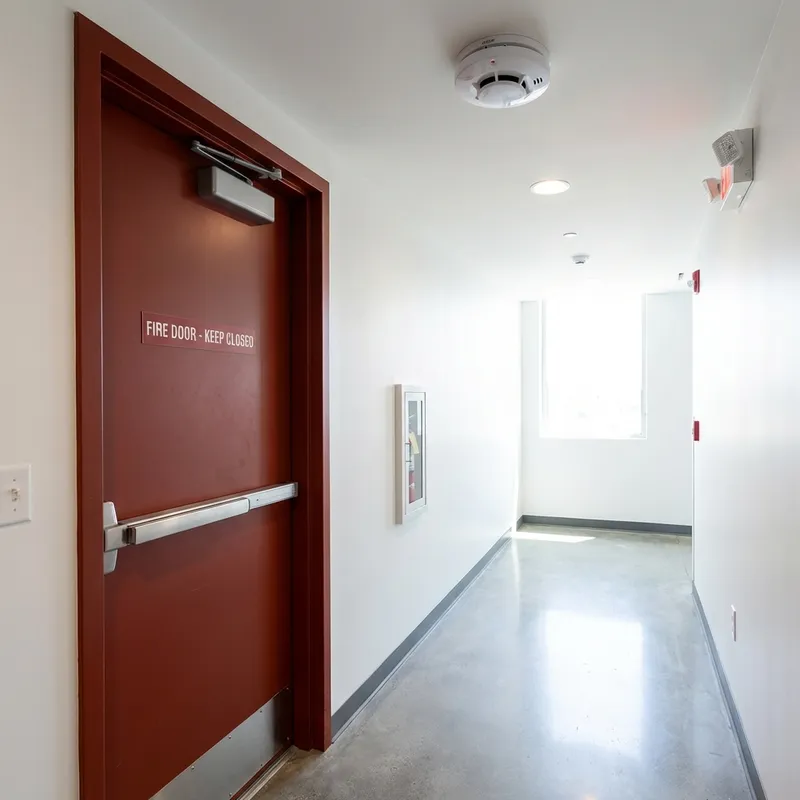
Fire doors, emergency lighting and alarm systems
In HMOs and blocks, the assessment usually calls for fire-resisting doors, interlinked detection and lit escape routes. Each brings its own landlord safety certificates: fire door inspection and certification, fire alarm installation and servicing, and a periodic emergency lighting test. Specifications come from the assessment and your council's licensing standards rather than one national rule, so confirm what your local authority expects before ordering work.
PAT Testing and Other Landlord Safety Certificates for HMOs
Beyond the core four, a handful of additional landlord safety certificates apply to particular properties.
Portable appliance testing
No statute says "PAT test every year" for a domestic let. The duty is that any electrical appliance you supply — cooker, fridge, washing machine, lamps in a furnished flat — must be safe, and testing is the standard way of evidencing that. Councils commonly expect PAT testing records as part of HMO licence conditions, and requirements vary between boroughs, so check your own council's. Appliances the tenant brings are not yours to test.
Asbestos and legionella
Buildings constructed or refurbished before 2000 may contain asbestos. The duty to manage asbestos applies to non-domestic premises and to the common parts of residential blocks, which is why managing agents commission an asbestos survey before refurbishment work. Separately, the Health and Safety Executive expects landlords to assess and control the risk of legionella in water systems. For a typical small domestic system that means a proportionate written assessment, not laboratory testing.
HMO extras
Licensed HMOs sit on top of everything above: room sizes, amenity standards, management regulations and licence conditions that often demand landlord safety certificates a single-family let would never need. Those conditions differ from borough to borough, and London councils are among the most demanding. Our HMO licence guide explains how the schemes work; always read the conditions attached to your own licence.
New Tenancy Checklist: Landlord Safety Certificates to Hand Over
Most disputes come down to what the tenant was given at the start. Work through this list of landlord safety certificates before anyone moves in.
| Document | Renewal | Give to tenant | Keep for |
|---|---|---|---|
| Gas Safety Record (CP12) | Every 12 months | Start of tenancy; within 28 days of each later check | 2 years minimum |
| EICR | At least every 5 years | Before occupation; within 28 days of a new report | Until superseded, and beyond |
| EPC | Every 10 years | At or before the start of the tenancy | Life of the certificate |
| Fire risk assessment | Reviewed regularly and after changes | Not required, but share findings affecting tenants | Current plus previous versions |
| PAT / appliance records | As risk requires or licence states | On request | Until appliances replaced |
Alongside the landlord safety certificates themselves, England has three further documents that carry the same practical weight at the start of a tenancy:
- The current How to Rent guide, provided to the tenant.
- Deposit protection in a government-approved scheme, with the prescribed information served on the tenant.
- A written record that smoke and carbon monoxide alarms were tested on the first day of the tenancy.
Failing to serve these correctly can affect a landlord's ability to rely on certain possession procedures. Possession law has been subject to repeated reform, so check the current position on GOV.UK and take legal advice before serving any notice.
Keeping Organised Records of Your Landlord Safety Certificates
The cheapest improvement most landlords can make is filing. When a council officer, insurer or solicitor asks for landlord safety certificates, they want them within days, and "I know we had it done" is not evidence. A workable system needs very little:
- One digital folder per property, with a subfolder per year.
- Consistent file names — property, document type, date, for example 12-High-St-CP12-2026-08-04.
- A renewal calendar with reminders 60 days before each expiry.
- Proof of service: the email or receipt showing the tenant got their copy, not just the certificate.
- Access attempts logged in writing where entry has been refused.
If you hold several properties, bundling renewals into one visit is cheaper and easier to track. Our pricing page lists individual and combined packages, and we can align expiry dates so future landlord safety certificates fall due together.
Need it handled? Landlord Safety Checks London issues landlord safety certificates for gas, electrical, fire and energy compliance across every London borough. Book online or contact the team on 0208 178 4580 and we will tell you exactly which certificates your property needs.
Frequently Asked Questions
Which landlord safety certificates are legally required for every rental?
An EPC is needed to market any rental, and an EICR is required for privately rented homes in England. A Gas Safety Record applies only where there is gas. Fire, appliance and asbestos duties depend on the building and how it is let.
How long do landlord safety certificates last?
A Gas Safety Record lasts 12 months, an EICR up to five years (less if the report specifies a shorter interval), and an EPC ten years. A fire risk assessment has no fixed expiry but must be reviewed regularly and whenever the building or its use changes.
What happens if a tenant will not let the engineer in?
You must take all reasonable steps and be able to prove it. Give written notice, offer alternative appointments and keep every message. Never force entry — document the refusals and seek advice if access is still blocked as a certificate deadline approaches.
Do I have to give tenants copies of all my landlord safety certificates?
Gas Safety Records, EICRs and EPCs must be supplied to tenants within the timescales above. Fire risk assessments and appliance testing records are not usually served on tenants, but you should share findings that affect them and produce the records on request from the council.
This article is general guidance on compliance for landlords in England and is not legal advice. Rules change, and local authority requirements vary, so check the current position on GOV.UK or take professional advice on your own circumstances.
About the Author
James Wilson
Senior Compliance Officer
Specializing in UK property law and safety regulations with over 15 years of experience in the London market.