HMO Licence London: Requirements, Conditions and Compliance
David Chen
August 4, 2026
If you let a shared house in the capital, the HMO licence London boroughs require is not one national scheme but a patchwork of local ones. Mandatory licensing applies across England to larger shared houses, yet most London councils also operate additional or selective licensing schemes that pull far smaller properties into the net — each with its own criteria, conditions and fee structure. This guide explains what licensing covers, the safety standards attached to it, and the compliance paperwork councils usually ask to see.
One point matters more than any other and it comes first: HMO licence London requirements and fees vary by borough. Two near-identical terraced houses a mile apart, on opposite sides of a boundary, can face completely different obligations. Always check the scheme published by the council the property actually sits in before you advertise a room.
HMO Licence London: Who Actually Needs One?
A House in Multiple Occupation is, broadly, a property let to three or more people forming more than one household who share a kitchen, bathroom or WC. Whether that HMO needs a licence depends on two separate things — the national mandatory scheme, and whatever discretionary scheme your borough has designated. HMO licence London obligations are the product of both, so you have to check each in turn.
- Mandatory licensing — applies everywhere in England to an HMO occupied by five or more people forming two or more separate households.
- Additional licensing — a borough-designated scheme extending licensing to smaller HMOs, commonly three- and four-person shares, across all or part of the borough.
- Selective licensing — covers privately rented homes in a designated area whether or not they are HMOs, including ordinary single-family lets.
Designations are made for a fixed period and are renewed, replaced, extended or allowed to lapse. A street that needed a licence three years ago may not need one today, and vice versa. Treat any HMO licence London guidance you read — including this article — as orientation, then confirm the position on your own council's licensing pages. GOV.UK sets out the national framework for HMO licences, but the operative detail is always local.
Planning permission is a separate question
Many London boroughs have made Article 4 directions removing permitted development rights for the change of use from a family dwelling to a small HMO. Where one applies, you need planning permission as well as a licence. HMO licence London applications and planning applications run on separate tracks, through different teams — holding one consent never excuses the absence of the other.
Mandatory HMO Licensing for Larger Shared Houses
HMO licence London decisions under the mandatory scheme rest on Part 2 of the Housing Act 2004. Before granting a licence, the council must be satisfied that the proposed licence holder is a fit and proper person, that management arrangements are satisfactory, and that the property is reasonably suitable for the number of occupiers proposed — or can be made so with conditions attached.
A licence is granted for a maximum of five years, though councils frequently issue shorter terms where the compliance history is thin. It is specific to a property, a licence holder and a maximum occupancy; it does not transfer with a sale, and letting beyond the permitted occupancy is a breach in itself.
Every mandatory licence carries a set of statutory conditions. In general terms these require the licence holder to:
- Produce a current annual gas safety record to the council on request.
- Keep electrical appliances and furniture supplied by the landlord in a safe condition, with a declaration available on demand.
- Install smoke alarms and keep them in proper working order.
- Provide each occupier with a written statement of the terms on which they occupy.
- Comply with the council's arrangements for storage and disposal of household waste.
- Observe the national minimum sleeping room sizes and the maximum number of occupiers per room.
Councils then add their own conditions on top. HMO licence London conditions are therefore only half national — the rest is written locally, and that is where most of the practical work sits.
Additional and Selective Licensing: Why Your Borough Matters
Discretionary schemes are the reason blanket advice is dangerous. HMO licence London rules vary from borough to borough at almost every level: a borough may designate additional licensing borough-wide, or only in named wards; it may set its own amenity standards for kitchens and bathrooms; it may require a fire risk assessment carried out by a specified type of assessor; it may demand five-yearly electrical reports as standard or ask for them more often in higher-risk buildings.
HMO licence London fees are set locally, and they vary just as widely. Councils commonly split the charge into an application part and a grant part, offer reductions for accredited landlords or early renewals, and charge more for larger properties or per unit of accommodation. Because the numbers change with each designation and each fee review, no responsible guide should quote them. The only reliable HMO licence London fee is the one published in your own borough's current schedule of charges.
What to check before you apply
HMO licence London applications are usually held up by the same handful of gaps, so confirm all of the following before you submit:
- Which scheme, if any, covers the exact postcode — not the borough in general.
- The borough's published amenity and space standards for the occupancy you want.
- Whether an Article 4 direction affects the property.
- The documents that must accompany the application, and in what format.
- Whether a temporary exemption notice is appropriate while you convert the property back to non-licensable use.
HMO Licence London: The Fire Safety Conditions Councils Attach
Fire precautions dominate HMO licence conditions, and for good reason: shared escape routes, unrelated occupants and multiple ignition sources make shared housing higher risk. Under the Regulatory Reform (Fire Safety) Order 2005 you are the responsible person for the common parts, and councils treat the evidence of that duty as a licensing matter. HMO licence London inspections often open with the fire file for exactly that reason.
Fire risk assessment
A suitable and sufficient fire risk assessment, kept under review, is the document inspectors ask for first. It identifies hazards, the people at risk, the control measures needed and the review date, and every other fire decision flows from it. Our HMO fire risk assessment service produces a written assessment with a prioritised action plan you can hand straight to the licensing officer.
Detection, emergency lighting and fire doors
Alarm provision is normally specified against BS 5839, with the grade and category driven by the size and layout of the property rather than a fixed rule. Larger or multi-storey HMOs typically need a mains-wired, interlinked system that is tested and logged — work our fire alarm installation and testing engineers can specify and certify. Where an escape route would be dark if the power failed, emergency lighting to BS 5266 is usually expected, function-tested monthly and duration-tested annually through our emergency lighting test.
Doors opening onto the protected escape route, and doors to higher-risk rooms such as kitchens, are commonly required to be fire-resisting and self-closing. Councils increasingly want written evidence rather than a visual guess, which is what a fire door inspection and certificate provides. Extinguishers and fire blankets in shared kitchens and common parts should be serviced annually to BS 5306 by our fire extinguisher testing team.
Smoke and carbon monoxide alarm duties for rented homes have been amended more than once in recent years. Describe them to yourself in general terms — alarms on each storey used as living accommodation, and carbon monoxide detection where fixed combustion appliances are present — then confirm the current requirements on GOV.UK, because the detail has moved.
Gas, Electrical and Energy Certificates Councils Ask For
Licensing officers work from paperwork. HMO licence London checklists differ between boroughs, but the same core certificates come up with an application or at an inspection:
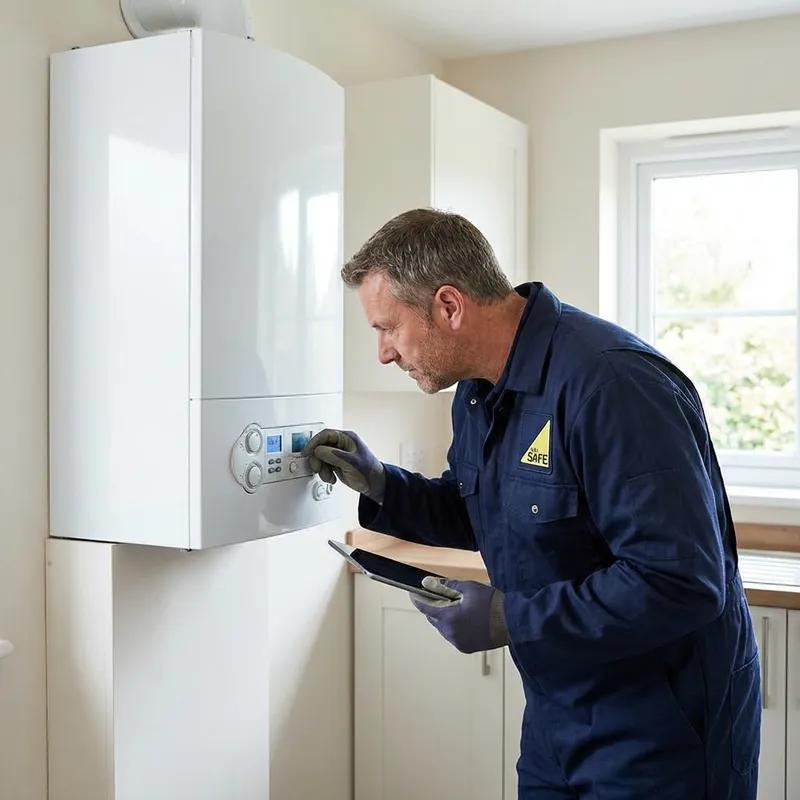
- Gas Safety Record — under the Gas Safety (Installation and Use) Regulations 1998, appliances and flues must be checked annually by a Gas Safe registered engineer. The record goes to existing tenants within 28 days, to new tenants at the start of the tenancy, and copies are kept for two years. Book an annual gas safety certificate, or a commercial gas certificate for mixed-use buildings.
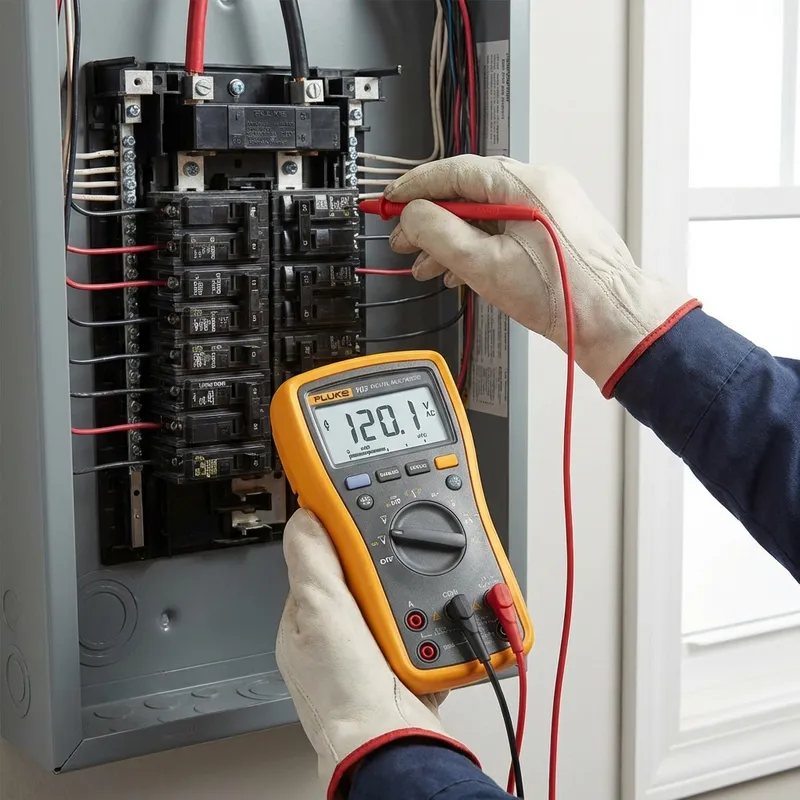
- EICR — the Electrical Safety Standards in the Private Rented Sector (England) Regulations 2020 require the fixed installation to be inspected at least every five years, in force for all existing tenancies since 1 April 2021. Any C1, C2 or FI code must be remedied within 28 days, or sooner if the report says so; the report goes to tenants within 28 days and to the local authority within seven days on request. Local authorities can impose a financial penalty of up to £30,000 for a breach. Arrange an EICR certificate before you apply, not after.
- EPC — an Energy Performance Certificate is valid for ten years, and under the Minimum Energy Efficiency Standards a property must normally reach at least band E to be let lawfully, subject to the registered exemptions. A higher minimum band has been proposed and reviewed repeatedly, so treat it as under review rather than settled and check current government guidance. Order an EPC certificate if yours is close to expiry.
Room Sizes, Amenity Standards and Management Duties
National mandatory conditions set minimum sleeping room floor areas: 6.51 square metres for one person aged over ten, 10.22 square metres for two people aged over ten, and 4.64 square metres for one child under ten. A room below 4.64 square metres cannot be used as sleeping accommodation at all. Councils may apply higher standards of their own, and floor area under a low sloping ceiling is generally discounted.
HMO licence London amenity standards are a local matter. How many occupiers may share a WC, bath or shower, how much kitchen worktop, sink and storage provision is needed, and the number of cooking points are all set by the borough, and they differ noticeably between neighbouring authorities. Read your council's published schedule rather than assuming the one you used last time still applies.
Separately, the Management of Houses in Multiple Occupation (England) Regulations 2006 place ongoing duties on the manager: keep escape routes clear and free from obstruction, maintain fire equipment in working order, keep the water supply and drainage sound, maintain common parts and gardens, and display your name, address and contact details in the property. HMO licence London conditions often restate these duties, but the 2006 Regulations apply in their own right.
Applying for an HMO Licence: Process, Fees and Enforcement
An HMO licence London application is made to the borough itself, normally through an online portal. Expect to supply a floor plan with room dimensions and uses, the gas safety record, the EICR, the fire risk assessment, alarm and emergency lighting certificates, proof of ownership or management authority, and declarations covering the fit and proper person test. Incomplete submissions are the most common cause of delay.
Councils usually inspect, either before or after granting, and may grant with conditions requiring specified works within set timescales. Get your certificates in order first: an inspection that finds a missing EICR or an expired gas record turns a straightforward grant into a schedule of works.
HMO licence London enforcement powers are wide. Operating an unlicensed HMO that requires a licence is a criminal offence, and the options available to councils include prosecution, financial penalties as an alternative to prosecution, rent repayment orders in favour of tenants or the authority, and banning orders in serious cases. An unlicensed property can also restrict a landlord's ability to serve certain possession notices. The practical lesson is simple — apply before you let, and keep the compliance evidence current.
HMO Licence London Renewals and Ongoing Compliance
Licensing is not a one-off hurdle. The certificates behind it expire on different cycles: gas annually, EICR at least every five years, emergency lighting monthly and annually, alarms on a service schedule, the fire risk assessment under periodic review. Diary them together and an HMO licence London renewal becomes an administrative task rather than an emergency.
Landlord Safety Checks London works across the capital and can combine the fire risk assessment, alarm and emergency lighting tests, fire door inspection, gas safety check and EICR into a single coordinated visit, with certificates formatted for licensing officers. Book your HMO compliance visit online, see our pricing, or contact the team on 0208 178 4580.
Frequently Asked Questions
Does every shared house need an HMO licence London-wide?
No. Mandatory licensing applies to HMOs with five or more occupiers forming two or more households, but many boroughs run additional schemes covering three- and four-person shares, and selective schemes covering ordinary lets. HMO licence London rules are set locally, so whether yours needs one depends entirely on the designation in force at that address.
How long does an HMO licence last?
Up to five years, and often less. HMO licence London terms are set by the council, which can issue a shorter licence where it wants to review compliance sooner. Licences do not transfer on sale — a new owner must apply in their own name.
Which certificates should I have ready before applying?
HMO licence London paperwork should be complete before you submit rather than gathered afterwards: at minimum a current gas safety record, a satisfactory EICR, a written fire risk assessment, and alarm and emergency lighting test records. Many boroughs also request a scaled floor plan showing room sizes and a copy of the EPC.
Do fees for an HMO licence differ between boroughs?
Yes, significantly. HMO licence London fee levels, the way charges are split between application and grant, discounts for accredited landlords, and any per-unit uplift are all set by the individual council and reviewed periodically. Always take the figure from your own council's current fee schedule.
This article is general guidance for London landlords and letting agents, not legal advice. Licensing designations, conditions and fees are set by individual boroughs and change over time — confirm the current position with your local council and, where the stakes are high, take professional advice.
About the Author
David Chen
Senior Compliance Officer
Specializing in UK property law and safety regulations with over 15 years of experience in the London market.