Smoke and Carbon Monoxide Alarm Rules for Landlords
David Chen
August 4, 2026
Smoke and carbon monoxide alarms are the cheapest life-safety measure a landlord will ever fit, and the first thing a council officer looks at when a rented home is inspected. If you let a property in England you must provide a working smoke alarm on every storey used as living accommodation, plus a carbon monoxide alarm in rooms containing a fixed combustion appliance. This guide explains those duties, where the units should go, how to test them and when to replace them.
One caveat first. The rules on smoke and carbon monoxide alarms sit in The Smoke and Carbon Monoxide Alarm (England) Regulations 2015, and that legislation has been amended since it came into force — the scope was widened and the wording tightened. Because the detail has changed more than once, this article describes the duties in general terms. Confirm the current requirements with the landlord guidance on GOV.UK before relying on any summary, including this one.
Which Properties the Alarm Rules Cover
The duty to provide smoke and carbon monoxide alarms applies to residential premises let under a tenancy in England. That captures assured shorthold tenancies, statutory periodic tenancies and most licences to occupy, so most buy-to-let flats and houses across London are in scope from day one.
Some arrangements sit outside the regulations, including certain long leases, holiday lets, accommodation shared with the landlord, and premises covered by other regimes such as registered care homes and purpose-built student halls. The exclusions are narrower than landlords assume, so check current GOV.UK guidance rather than a rule of thumb. The regulations are published on legislation.gov.uk.
Houses in multiple occupation carry extra obligations under HMO management rules and the Regulatory Reform (Fire Safety) Order 2005, so smoke and carbon monoxide alarms in a shared house are usually specified by a competent assessor rather than chosen off the shelf. Our guide to HMO fire regulations covers that, and a fire risk assessment is the document that sets the standard.
Smoke Alarms on Every Storey Used as Living Accommodation
The headline duty is simple: at least one smoke alarm on every storey used wholly or partly as living accommodation. It is the word storey that catches landlords out, not the word alarm.
- A converted loft room is a storey used as living accommodation, so it needs its own alarm — a landing alarm one floor below does not discharge the duty.
- A basement with a utility room, study or bedroom counts, even if the tenants rarely go down there.
- A hallway on a floor with no habitable rooms can still count where it forms part of the escape route.
- Split-level flats and mezzanines need a considered view; if in doubt, fit detection at both levels.
One alarm per storey is the legal floor, not good practice. Competent installers work to BS 5839-6, the British Standard for fire detection in domestic premises, which recommends alarms in the hallway and on the landings forming the escape route, often extended to the living room and principal bedroom. Fitting to the standard costs little more and gives tenants a genuine head start.
Choose alarms marked to BS EN 14604. Optical alarms suit the smouldering fires most common in homes, while heat alarms — not smoke alarms — belong in kitchens and garages, where cooking fumes cause false alarms and tempt tenants to disable the unit.
Carbon Monoxide Alarms and Fixed Combustion Appliances
Carbon monoxide is colourless, odourless and can kill without warning, which is why the second half of the duty exists. In broad terms, a carbon monoxide alarm is required in any room used as living accommodation containing a fixed combustion appliance.
That means anything installed which burns fuel: a gas boiler, a gas fire, an open fire or wood-burning stove, an oil-fired boiler, a solid fuel range. The obligation is not limited to gas — solid fuel and oil appliances are among the highest-risk sources of carbon monoxide in older London housing stock.
The treatment of certain appliances, most notably gas cookers, has been amended, as have the rules on when an alarm must be fitted or replaced. Rather than repeat a version that may be out of date, confirm the current position on GOV.UK. In practice, fit a carbon monoxide alarm in every room with any fuel-burning appliance and stop worrying about exclusions.
Look for units conforming to BS EN 50291 and check the end-of-life date on the casing. Carbon monoxide sensors degrade, and an alarm fitted at the start of a five-year tenancy may expire before the tenancy does.
Testing Smoke and Carbon Monoxide Alarms at the Start of Each Tenancy
Providing the hardware is only half the job. Landlords must also make sure smoke and carbon monoxide alarms are in proper working order on the day a new tenancy begins — not the week before, and not at a check-in a fortnight later.
That means physically pressing the test button on each unit and hearing it sound. A visual check is worthless: an alarm can look perfect while hiding a flat battery or a failed sensor. Build the test into your pre-tenancy routine alongside the meter readings and the inventory.
Record what you did. A dated inventory line listing each of the smoke and carbon monoxide alarms by location, confirming it was tested and signed by the tenant, is cheap and hugely persuasive if the position is ever questioned. Timestamped photographs are a useful supplement.
Use the same visit to show tenants how to test the alarms, what the bleep patterns mean, and what to do if a carbon monoxide alarm sounds — leave the property, ventilate if it is safe to do so, and call the Gas Emergency Service.
Repair and Replacement Duties Once Tenants Move In
During the tenancy the balance shifts. Tenants are generally expected to test smoke and carbon monoxide alarms periodically and replace any user-replaceable batteries, while the landlord must repair or replace a faulty unit once told about it. The regulations have been amended to require landlords to act promptly on being informed of a fault, so treat every report as urgent and check the current wording on GOV.UK.
- Give tenants a clear reporting route — an email address or portal that produces a dated record, not a passing comment on the doorstep.
- Respond in days, not weeks. If a unit cannot be repaired quickly, fit a temporary alarm while the replacement is arranged.
- Keep spares. A boxed alarm in the office turns a compliance problem into a twenty-minute errand.
- Replace at end of life. Smoke alarms are typically replaced around ten years from manufacture, and carbon monoxide alarms by the marked expiry date, whether or not they still respond to the test button.
- Check at every visit. Add smoke and carbon monoxide alarms to mid-tenancy inspections and to your annual gas and periodic electrical visits.
Where a local authority has reasonable grounds to believe smoke and carbon monoxide alarms are missing or unserviceable, it can serve a remedial notice requiring the work, arrange the work itself if the notice is ignored, and impose a financial penalty. Enforcement is easy to pursue, because a missing alarm is very simple to prove.
Where to Site Smoke and Carbon Monoxide Alarms
Correct siting matters as much as the number of units. Badly placed smoke and carbon monoxide alarms either fail to detect early or generate so many false alarms that tenants disconnect them, and a disconnected alarm protects nobody.
Smoke alarm positioning
Smoke alarms should normally be fixed to the ceiling in a central position, at least 300 millimetres from any wall or light fitting. Keep them out of bathrooms where steam causes false alarms, and away from the direct path of cooking fumes. On a sloping ceiling, follow the manufacturer's instructions on distance from the apex, and avoid draughty spots beside windows or extractor fans.
Carbon monoxide alarm positioning
Carbon monoxide behaves differently from smoke, so the rules differ too. Follow the manufacturer's instructions and the guidance in BS EN 50292, which generally places the alarm at around breathing height on a wall, or on the ceiling well away from the wall, and typically one to three metres horizontally from the appliance. Never tuck the unit inside a boiler cupboard, directly above a heat source, behind curtains, or anywhere air cannot circulate.
Carbon monoxide also migrates between rooms, so where a tenant sleeps a long way from the appliance, an extra alarm near the bedroom is a sensible precaution.
Mains-Interlinked or Battery Smoke and Carbon Monoxide Alarms?
The regulations do not dictate a power supply, so a compliant installation can in principle use sealed battery units. The choice still matters, and for anything other than a small single-storey flat, interlinked mains detection is the better answer.
Interlinking means that when one alarm detects a fire, every alarm in the property sounds. In a three-storey London terrace, a kitchen fire detected on the ground floor is useless information to someone asleep two floors up unless the alarms are linked. Interlinking can be wired or radio-frequency, and radio-linked smoke and carbon monoxide alarms avoid disruptive chasing in a finished property.
| Feature | Mains-powered, interlinked | Sealed battery (tamper-proof) |
|---|---|---|
| BS 5839-6 grade | Grade D1 | Grade F1 |
| Power supply | Mains with backup battery | Ten-year sealed lithium cell |
| All alarms sound together | Yes | Only if radio-linked models are chosen |
| Installation | Qualified electrician required | Landlord or handyperson can fit |
| Usually expected in | HMOs and multi-storey homes | Small single-storey flats |
Mains-powered units form part of the fixed electrical installation, so they must be installed by a competent electrician working to BS 7671. Many landlords combine an alarm upgrade with other electrical work — a consumer unit replacement, say — so the property is disturbed once. HMO licence conditions and fire risk assessments frequently specify interlinked detection, and where they do, battery-only units will not satisfy the council.
How Smoke and Carbon Monoxide Alarms Fit With Your Other Certificates
Alarm duties do not exist in isolation. Smoke and carbon monoxide alarms sit inside a wider compliance programme, and the same engineer visits often cover several obligations at once.
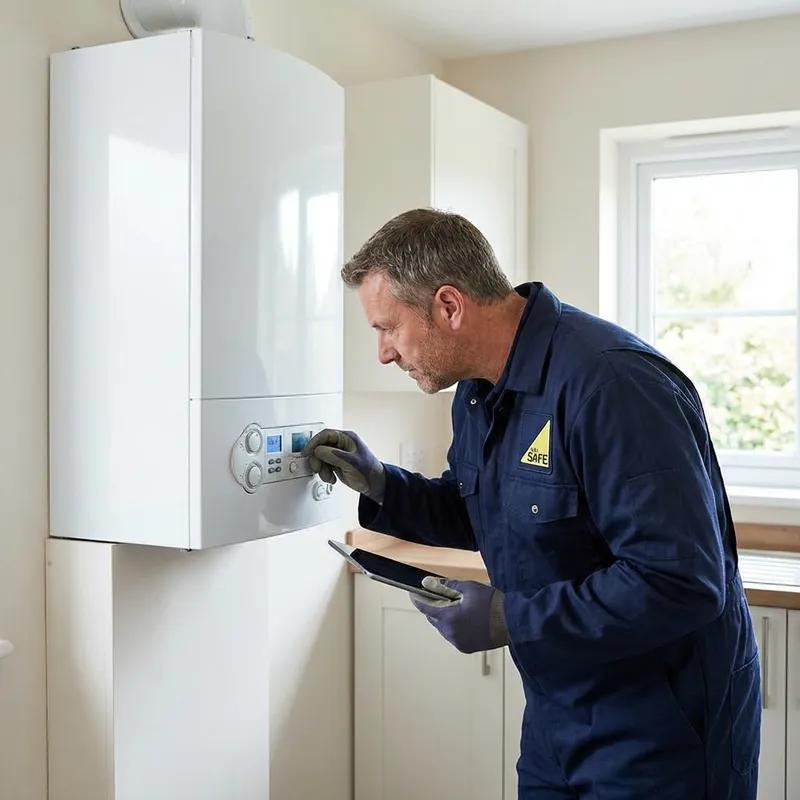
- Gas. An annual gas safety certificate from a Gas Safe registered engineer is required where there are gas appliances, and the record must reach existing tenants within 28 days or new tenants at the start of the tenancy. A poorly maintained appliance is the usual source of carbon monoxide.
- Electrical. Rented homes in England need an EICR at least every five years under the Electrical Safety Standards in the Private Rented Sector (England) Regulations 2020, with C1 and C2 faults remedied within 28 days and penalties of up to £30,000 for breach.
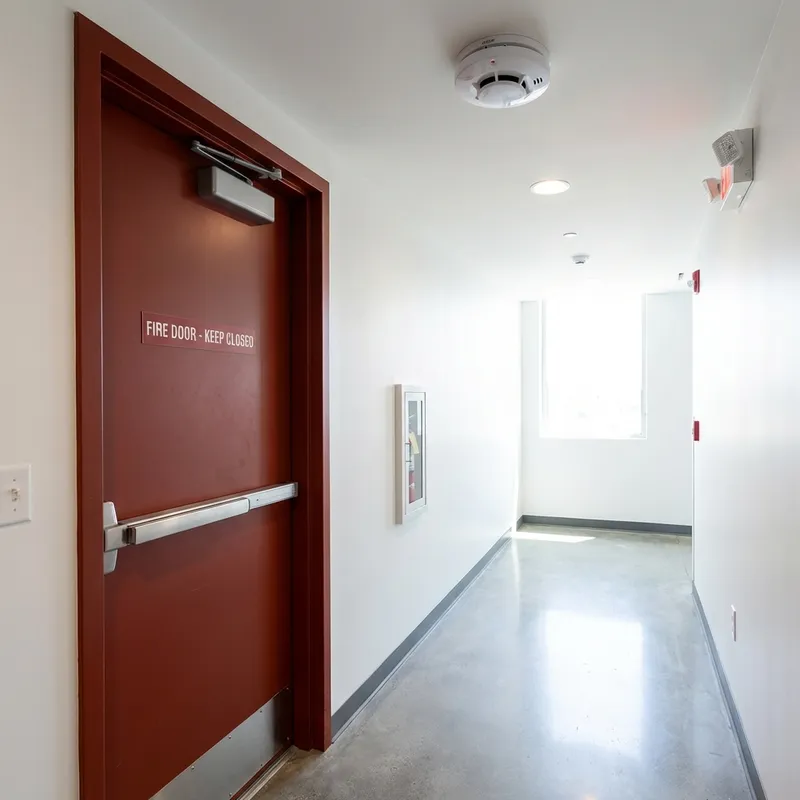
- Fire. A fire risk assessment is required for the common parts of blocks of flats and HMOs, and it specifies the detection grade and category the building needs.
- Systems. Larger buildings need a designed system rather than domestic alarms — see fire alarm installation and, where escape routes would be dark in a power cut, emergency lighting testing.
- Energy. A valid EPC, which lasts ten years, is needed to market a property, and lettings must meet the minimum energy efficiency standard of band E.
Getting smoke and carbon monoxide alarms right is quick and inexpensive. The expensive part is discovering during a council inspection that the loft conversion was never covered. If you would like one visit to test, replace and certify the smoke and carbon monoxide alarms in your London property, book an appointment online, review our pricing or contact the team on 0208 178 4580.
Frequently Asked Questions
How many smoke and carbon monoxide alarms does a rented flat need?
At minimum, one smoke alarm on each storey used as living accommodation and a carbon monoxide alarm in every room containing a fixed combustion appliance. A single-storey flat with a combi boiler in the kitchen therefore needs at least one hallway smoke alarm and one carbon monoxide alarm serving the boiler. Following BS 5839-6 usually means fitting more.
Who replaces the batteries in smoke and carbon monoxide alarms during a tenancy?
Routine testing and replacing user-replaceable batteries generally falls to the tenant. Once a tenant reports a faulty unit, the landlord must repair or replace it promptly. Sealed ten-year alarms remove the argument entirely, which is why many landlords now fit them as standard.
Does a carbon monoxide alarm satisfy the gas safety requirement?
No. Smoke and carbon monoxide alarms and the annual gas safety check are separate duties. You still need a Gas Safe registered engineer to test the appliances each year and issue the record.
Do smoke and carbon monoxide alarms have to be mains-powered?
The regulations do not require mains power, so compliant sealed battery alarms are acceptable in many properties. However, HMO licence conditions, fire risk assessments and local authority standards frequently call for interlinked mains detection, so check what applies to your building before choosing.
This article is general guidance for landlords in England and is not legal advice. Requirements change over time and vary by property type and borough — confirm the current rules on GOV.UK or with your local authority, and take professional advice on your own circumstances.
About the Author
David Chen
Senior Compliance Officer
Specializing in UK property law and safety regulations with over 15 years of experience in the London market.